May 4, 2026 · 12 min read
Eye Color Genetics Explained: How Your DNA Determines Iris Color
Learn how eye color genetics work. Discover the roles of OCA2, HERC2, and melanin in determining if your eyes are brown, blue, green, hazel, amber, or gray.
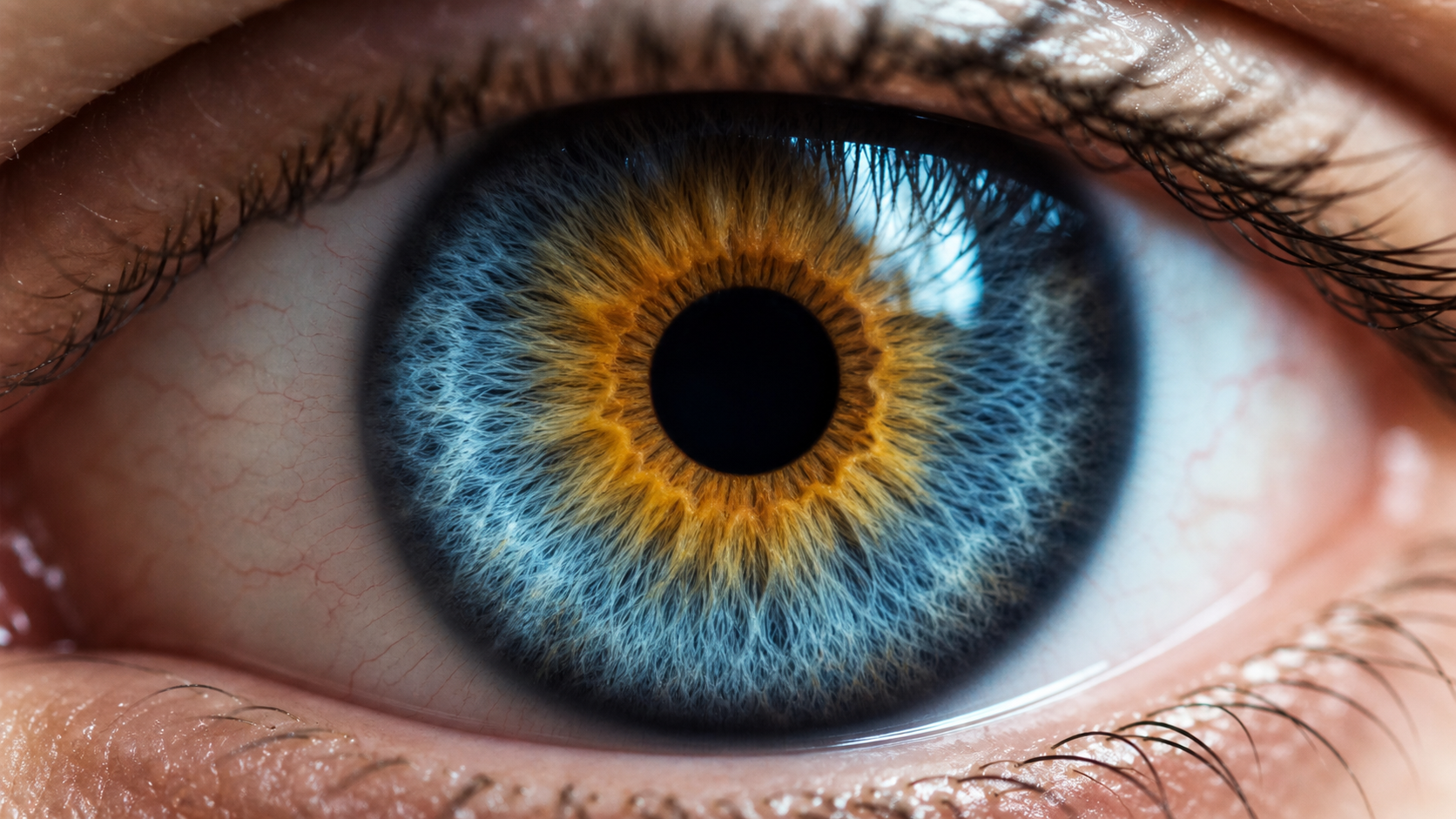
Eye color genetics is a complex polygenic trait determined by multiple genes that control the production, transport, and storage of melanin within the iris. While you might have learned in grade school that a single gene decides whether you have blue or brown eyes, modern science shows a much more intricate system at work. Up to sixteen different genes influence the final shade of your eyes. Understanding eye color genetics requires looking at how your DNA regulates pigment and how that pigment interacts with incoming light.
How do genes determine eye color?
Genes act as biological instruction manuals for your body. In the context of eye color genetics, these instructions are sent to specialized cells called melanocytes. Melanocytes are responsible for producing a pigment known as melanin. The color of your eyes depends entirely on the amount, type, and distribution of this melanin inside the iris.
The iris is the colored ring surrounding your pupil. It consists of multiple layers. The back layer is called the pigment epithelium, and it contains brown pigment in almost everyone. The front layer is called the stroma. The genetic variation in eye color primarily comes from the amount of melanin present in this front stroma layer.
Your genetics dictate a specific biological process that results in your final eye color. The process follows a clear biological pathway:
- Your DNA sends regulatory signals to the melanocytes located in the stroma of your iris.
- The melanocytes read these genetic instructions and begin synthesizing melanin from an amino acid called tyrosine.
- The cells produce specific ratios of two types of pigment: eumelanin, which is dark brown or black, and pheomelanin, which is yellow or red.
- This pigment is packaged into small structures called melanosomes and distributed throughout the stroma.
- When light enters the eye, it interacts with these pigment particles to reflect a specific color back to the observer.
People with dark eyes have genetics that instruct their melanocytes to produce a massive amount of eumelanin. People with light eyes have genetics that severely limit melanin production in the stroma. It is important to note that there are no blue or green pigments in the human eye. The only pigments are brown, black, yellow, and red. The appearance of blue or green is entirely due to how light scatters when melanin levels are low.
What are the main genes involved in eye color genetics?
While research suggests up to sixteen genes play a role in eye color genetics, the vast majority of human eye color variations are determined by two specific genes located very close to each other on chromosome 15. These genes work in tandem to control how much pigment your eyes create.
The OCA2 gene
The OCA2 gene, which stands for oculocutaneous albinism II, is the most critical gene for eye pigmentation. This gene provides the instructions for making a protein called the P protein. The P protein is located in the melanocytes and is essential for the maturation of melanosomes. Melanosomes are the cellular structures that produce and store melanin.
When the OCA2 gene is highly active, the P protein functions optimally. This allows the melanosomes to produce a large amount of eumelanin. The result is a high concentration of brown pigment in the iris, leading to brown eyes. Genetic variations in the OCA2 gene can reduce the production of the P protein. Less P protein means less melanin is synthesized, which results in lighter eye colors like blue, green, or gray. Severe mutations in the OCA2 gene can lead to a condition called oculocutaneous albinism, characterized by almost no pigment in the hair, skin, and eyes.
The HERC2 gene
The HERC2 gene sits right next to the OCA2 gene on chromosome 15. Its role in eye color genetics is fascinating. HERC2 does not produce melanin directly. Instead, it acts as a regulatory switch for the OCA2 gene. A specific region within the HERC2 gene called an enhancer element controls the transcription of OCA2.
If you have a specific mutation in this enhancer region of the HERC2 gene, the switch is turned off. The OCA2 gene is essentially told to stop working, dramatically reducing the amount of P protein produced. This specific HERC2 mutation is the primary genetic cause of blue eyes in humans. Research suggests that almost all people with blue eyes share a single common ancestor who experienced this exact genetic mutation thousands of years ago.
The TYR gene
The TYR gene provides instructions for making an enzyme called tyrosinase. Tyrosinase is the critical catalyst that starts the chemical reaction turning the amino acid tyrosine into melanin. Variations in the TYR gene can influence the overall speed and volume of melanin production. While its role is secondary to OCA2 and HERC2 in dictating the specific color of the iris, it is a vital part of the pigment synthesis pathway.
The SLC24A4 gene
SLC24A4 is another gene associated with natural variations in human pigmentation. While often studied in the context of skin color and hair color, variations in this gene have been linked to differences in eye color, particularly in distinguishing between shades of blue and green. It demonstrates how eye color genetics are polygenic, relying on minor contributions from multiple genetic locations to fine-tune the final appearance of the iris.
Why is the two-gene model of eye color genetics outdated?
For decades, biology classes taught eye color genetics using a simplified Mendelian model. This model used a Punnett square to show that brown eyes were a dominant trait and blue eyes were a recessive trait. According to this old model, if a person had one gene for brown eyes and one gene for blue eyes, the brown gene would always win. It also stated that two blue-eyed parents could only ever have blue-eyed children because they lacked the dominant brown gene entirely.
We now know this model is inaccurate. Eye color is not a simple Mendelian trait. It is a polygenic trait.
> "Eye color is a complex polygenic trait, meaning multiple genes interact to determine the final concentration and distribution of melanin in the iris, making inheritance patterns highly unpredictable."
Polygenic inheritance means that the trait is controlled by the interaction of multiple genes, rather than just one or two. While OCA2 and HERC2 are the major players, the other fourteen known genes act as genetic modifiers. These modifiers can boost or suppress melanin production in unexpected ways.
Because so many genes interact, the old dominant and recessive rules do not always apply perfectly. A person might have the genetic switch for light eyes on chromosome 15, but modifier genes on other chromosomes might slightly increase melanin production, resulting in green or hazel eyes instead of blue. This complex interaction explains why there is a continuous spectrum of human eye colors rather than just three distinct categories.
How does melanin create different eye colors?
The genetic instructions you inherit determine the physical properties of your iris. Your eye color identifier result falls into one of six primary families. Here is how your genes create each of these distinct appearances.
- Brown eyes (Approx. 79% globally): The most common eye color. Highly active OCA2 genes result in stroma packed with eumelanin. The pigment absorbs almost all light entering the eye, reflecting a deep brown color.
- Blue eyes (Approx. 8% globally): A mutated HERC2 gene restricts melanin production. With a clear stroma, light enters the eye and hits the proteins in the tissue. Shorter blue light wavelengths scatter back out through a physics phenomenon called the Tyndall effect.
- Hazel eyes (Approx. 5% globally): Moderate melanin production combines with light scattering. Hazel eyes feature varying amounts of brown and green, often shifting in appearance depending on lighting.
- Amber eyes (Approx. 5% globally): Driven by a high concentration of the yellow-red pigment pheomelanin (sometimes called lipochrome). The stroma contains very little eumelanin, creating a solid golden or copper color.
- Green eyes (Approx. 2% globally): Very rare. The genetics produce a low amount of yellow pheomelanin. When the yellow pigment mixes with the blue Tyndall effect, the resulting reflected color is green.
- Gray eyes (Approx. 1% globally): The rarest eye color. Gray eyes have virtually no melanin. However, the stroma has larger collagen deposits than blue eyes, causing all wavelengths of light to scatter equally, creating a gray appearance.
You can read a detailed breakdown of how light scattering works in our guide on blue vs green eyes. If you are curious about the mechanics of the rarest eye color, check out our guide on gray eyes.
Can two blue-eyed parents have a brown-eyed child?
Under the old Mendelian model of eye color genetics, two blue-eyed parents having a brown-eyed child was considered genetically impossible. Because blue was seen as purely recessive, two blue-eyed parents would theoretically only have blue-eyed genes to pass on. Modern genetic testing has proven this is a myth.
It is entirely possible for two blue-eyed parents to have a child with brown eyes, though it is quite rare. This happens because of the complex nature of polygenic inheritance and genetic modifiers.
Consider the HERC2 and OCA2 genes. A parent might have a suppressed OCA2 gene due to a HERC2 mutation, resulting in blue eyes. However, they might also carry genetic instructions for high melanin production on other modifier genes. These modifier instructions remain dormant because the main HERC2 switch is turned off. If the child inherits a specific combination of genes that somehow reactivates the melanin production pathway, or bypasses the HERC2 mutation, the melanocytes in the child's iris will begin producing eumelanin.
The result is a brown-eyed child born to blue-eyed parents. While mathematically uncommon, it perfectly illustrates why human genetics cannot be mapped with a simple four-square chart.
What causes genetic anomalies like heterochromia?
Heterochromia is a fascinating genetic manifestation where a person has more than one eye color. This occurs when the distribution of melanin is uneven. Heterochromia is usually a benign genetic trait, though it can sometimes be linked to specific genetic syndromes.
There are three distinct types of heterochromia caused by eye color genetics:
- Complete heterochromia: One eye is an entirely different color than the other eye. For example, the left eye is intensely blue while the right eye is dark brown. This happens when melanin production is localized entirely to one side of the body during embryonic development.
- Sectoral heterochromia: A specific section or slice of the iris is a different color from the rest of the same iris. This looks like a birthmark on the eye. It is caused by a local mutation in a cluster of melanocytes during fetal growth.
- Central heterochromia: The most common form. The inner ring of the iris near the pupil is a different color than the outer ring. For example, a golden ring surrounds the pupil, but the outer iris is blue. This is a complex expression of polygenic traits where melanin distribution changes at different radial distances from the pupil.
Heterochromia can be inherited from parents as an autosomal dominant trait, meaning you only need the gene from one parent to express the physical trait. It can also occur spontaneously due to a genetic mutation early in embryonic development. In some cases, genetic disorders like Waardenburg syndrome can alter pigment development in the eyes, hair, and skin, leading to striking instances of complete heterochromia.
Can your eye color genetics change over time?
Your eye color genetics are locked in at the moment of conception. Your DNA sequence does not change over time. However, the physical expression of those genes, meaning your visible eye color, can shift during certain periods of your life.
The most prominent example of eye color changing over time occurs during infancy. Many babies of European descent are born with blue or slate gray eyes. This happens because the melanocytes in their stroma have not yet received the genetic signal to start producing massive amounts of melanin. The eyes appear blue due to the Tyndall effect. As the infant grows, exposure to light triggers the melanocytes to begin melanin synthesis according to their genetic instructions. Over the first twelve months of life, the iris may gradually fill with melanin, turning the eyes green, hazel, or brown. Once this developmental phase finishes, the genetic baseline is established.
In adulthood, spontaneous changes in eye color are extremely rare and are generally not caused by natural genetic shifts. Adult eye color changes are usually the result of external factors or medical conditions. For example, certain glaucoma medications called prostaglandin analogs can increase melanin production in the iris, causing light eyes to permanently darken. Conditions like Fuchs heterochromic iridocyclitis can cause inflammation that degrades the pigment in one eye, causing it to become lighter than the other. If you notice a sudden change in your adult eye color, you should consult an eye care professional, as your genetics are not responsible for the shift.
Are eye color genetics linked to other physical traits?
Because genes rarely exist in a vacuum, the genetic markers that determine eye color are frequently linked to other physical traits. This is known as genetic pleiotropy, where a single gene affects multiple physical characteristics.
The most obvious link is between eye color, skin color, and hair color. The OCA2 and TYR genes are deeply involved in overall bodily pigmentation. People with highly active OCA2 genes tend to produce abundant eumelanin throughout their bodies, resulting in dark brown eyes, dark hair, and more heavily pigmented skin. Conversely, the HERC2 mutation that limits melanin in the eyes often correlates with lower melanin levels in the hair follicles and skin cells, which is why blue eyes are frequently seen in individuals with blond hair and fair skin.
However, due to genetic recombination, these traits can be uncoupled. You can inherit the genes for dark skin alongside the specific HERC2 mutation for blue eyes, though this combination is less common.
Eye color genetics also play a role in light sensitivity. Melanin acts as a natural sunblock. Dark brown eyes contain thick layers of pigment that absorb bright sunlight and harsh glare. Light eyes, with very little melanin, lack this protective barrier. People with blue, green, or gray eyes often experience a condition called photophobia, which simply means an increased sensitivity to bright light. They are more likely to squint in direct sunlight and generally require sunglasses more frequently than individuals with highly pigmented brown eyes.
How the Eye Color Identifier helps
Understanding the science behind your genetics is fascinating, but figuring out exactly how those genes have expressed themselves in your own eyes can sometimes be difficult. Lighting, clothing, and the complex mixture of pigments can make it hard to categorize your specific shade. This is where the free eye color identifier becomes incredibly useful.
The Eye Color Identifier uses advanced vision AI to analyze a photo of your iris and determine which of the six main color families your genetics have produced. The tool analyzes the balance of brown, yellow, and structural light scattering to provide a highly accurate result.
Privacy is a core feature of the tool. Your photos are analyzed securely using server-side AI, and we have a strict zero data retention policy. Your images are never stored, saved, or shared. It is a fast, secure, and purely factual way to see the exact result of your unique genetic code. If you want to dive deeper into the differences between complex shades, you can read our comparison on green vs hazel eyes.
Frequently asked questions
What is the most common eye color genetically?
Brown is the most common eye color genetically, representing about 79 percent of the global population. This dominance is due to the high prevalence of active OCA2 genes that instruct melanocytes to produce large volumes of eumelanin, a trait essential for early human survival in bright, sunny climates.
What is the rarest eye color genetically?
Gray is considered the rarest eye color genetically, found in roughly one percent of the population. Gray eyes require an incredibly specific genetic combination that prevents almost all melanin production while simultaneously building a dense collagen structure in the stroma to scatter light evenly.
Is eye color inherited from the mother or father?
Eye color genetics are inherited equally from both parents. You receive one copy of each gene involved in eye pigmentation from your mother and one copy from your father. The final color is a complex mixture of how these inherited alleles interact with each other.
Can eye color skip a generation?
Yes, eye color can easily skip a generation. Because eye color is a polygenic trait, a person can carry the genetic instructions for a specific eye color without physically expressing it. These dormant genes can be passed down and expressed in grandchildren if they inherit the right combination of modifier genes.
Do eye color genetics affect vision quality?
Eye color genetics do not affect the sharpness or clarity of your vision. A person with blue eyes can see just as clearly as a person with brown eyes. However, the lack of melanin in lighter eyes does make them more sensitive to bright light and glare.
Identify your eye color now
Now that you understand the complex genes and melanin production responsible for your unique appearance, it is time to see your specific genetic results. Use our secure, AI-powered tool to scan your iris and determine your exact color category. Identify your eye color today and discover how your DNA shaped your vision.
Try the Eye Color Identifier
Find your eye color in seconds. Your data is kept secure — we don't store your data.
More articles
Rare Eye Color Combinations: Heterochromia and More
Rare eye color combinations include heterochromia, central rings, and sectoral patterns. Learn how they form and how to classify them clearly.
Do Eyes Change Color? Babies, Light, and Real Changes
Do eyes change color? Learn when shifts are normal in babies, why hazel and lighting can mislead, and when eye color changes merit a check.
Eye Color Identifier: What Eye Color Am I, Really?
Eye color identifier guide: learn how AI answers “What eye color am I?”, why eyes get mislabeled, and what genetics can and cannot tell you.