May 21, 2026 · 12 min read
Hazel Eye Color Identifier: How AI Maps Multi-Toned Irises
Discover how a hazel eye color identifier analyzes genetics, melanin, and light scattering to accurately classify multi-toned irises and heterochromia.
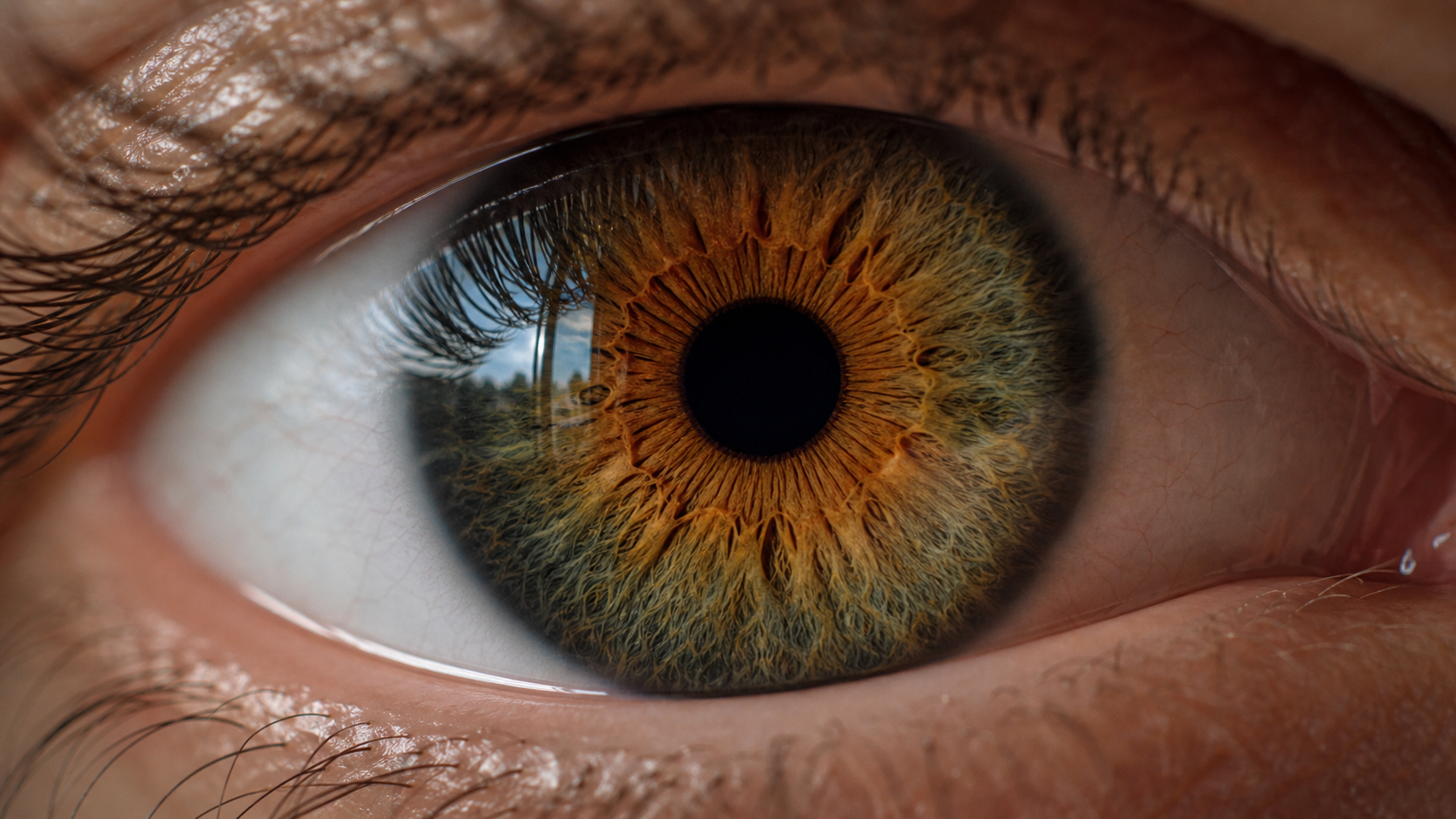
A hazel eye color identifier is a specialized vision AI tool designed to analyze the complex mix of green, brown, and gold pigments within the human iris. Because hazel eyes feature multiple tones and depend heavily on lighting conditions for their appearance, a computational approach provides an objective way to distinguish them from green, amber, or light brown eyes. This technology maps pigment distribution, calculates structural light scattering, and generates a confidence score to classify your exact eye color accurately.
What makes hazel eyes so difficult to identify?
Hazel eyes are notoriously hard to classify by the naked eye alone. They represent roughly 5 percent of the global population. Unlike solid eye colors such as dark brown or pure blue, hazel is a combination of specific anatomical structures, varying pigment levels, and optical phenomena.
The human iris consists of multiple layers. The back layer is known as the pigment epithelium. In almost all human eyes, regardless of their visible color, this back layer contains dark melanin. The front layer, called the stroma, is what determines the visible color of the eye. In hazel eyes, the stroma contains a moderate, uneven amount of melanin.
This uneven distribution is the core reason hazel eyes confuse people. The melanin is not spread uniformly across the anterior border layer of the stroma. Instead, it often clumps near the pupil or scatters outward in a sunburst pattern. Where the melanin is sparse, the structural tissue of the iris scatters shorter wavelengths of light. Where the melanin is dense, it absorbs light and reflects brown or yellow tones.
> "The appearance of hazel eyes is a direct result of two competing forces in the iris: the light-absorbing properties of melanin and the light-scattering properties of the stroma, which creates a structural blue or green backdrop against the physical pigment."
Because these two forces compete constantly, the eye never looks like one solid color. It is a constantly shifting canvas of light and pigment. This complexity is exactly why computational analysis using an eye color identifier is necessary to quantify the exact ratio of colors present in the iris.
How does genetics create hazel eyes?
The genetics behind eye color involve a complex interplay of multiple genes, making it a polygenic trait. Historically, scientists believed eye color followed a simple Mendelian inheritance model where brown was strictly dominant and blue was strictly recessive. We now know that up to 16 different genes influence eye color, with a few playing major roles in creating the hazel spectrum.
The OCA2 and HERC2 genes on chromosome 15 are the primary directors of melanin production. The OCA2 gene provides instructions for making the P protein. This protein is essential for the maturation of melanosomes, which are the cellular structures that produce and store melanin. The HERC2 gene acts as a switch that controls the expression of OCA2.
In people with hazel eyes, the genetic instructions result in a moderate amount of melanin being produced. It is more than what is found in blue or green eyes but less than what is found in brown eyes. Furthermore, other genes like TYR and SLC24A4 influence how this pigment is distributed across the iris and what type of melanin is produced.
These genetic variations mean that hazel eyes do not fit perfectly into a single category. They are part of a continuous spectrum of pigmentation. Genetic expression can even cause the distribution of melanocytes to change slightly during early childhood, which is why many babies born with blue eyes gradually develop hazel eyes by their third year of life.
What role do melanin types play in hazel eyes?
To understand how an eye color identifier evaluates a photo, you must understand the chemical makeup of eye pigment. Melanin is not a single substance. It comes in two primary forms within the human eye, and the ratio of these two forms dictates the exact shade of hazel.
Eumelanin is the most common form of melanin. It is a dense, dark pigment that appears brown or black. It is excellent at absorbing broad spectrums of light. Pheomelanin is a lighter pigment that appears reddish, yellow, or copper.
People with hazel eyes have a very specific combination of these two pigments. The outer edges of a hazel iris often contain lower levels of eumelanin, allowing light to scatter through the stroma and create a greenish appearance. The inner ring near the pupil often contains higher concentrations of pheomelanin and eumelanin, creating the characteristic gold, amber, or brown central burst.
When a vision AI analyzes a photo of a hazel eye, it looks for the specific pixel values associated with both eumelanin and pheomelanin. If an eye has too much eumelanin, the AI will likely classify it as light brown. If it has high pheomelanin but almost zero eumelanin, it may classify it as amber. The precise mixture of the two, overlaid on a light-scattering stroma, is the definitive signature of a hazel eye.
Hazel vs central heterochromia: What is the difference?
People often confuse multi-toned hazel eyes with a genetic condition called central heterochromia. While both conditions result in an iris that displays more than one color, their structural anatomy and visual presentation are entirely different. An eye color identifier uses edge detection and color boundary analysis to tell them apart.
Central heterochromia occurs when the inner ring of the iris is a completely different color than the outer ring, with a sharp, defined border between the two. Hazel eyes feature a blend of colors that bleed into one another without a strict boundary.
Here are the specific ways to tell the two apart:
- Examine the color boundary: Central heterochromia features a sharp, distinct line separating the inner pigmented ring from the outer color. Hazel eyes exhibit a gradual gradient where brown fades into gold, and gold fades into green.
- Look for the base color: Central heterochromia can occur in any eye color. You can have a pure blue eye with a sharp, solid brown ring around the pupil. Hazel eyes almost always contain structural green pigment mixed with brown and gold.
- Check for color mixing: In hazel eyes, the pigments mix throughout the stroma. You might see flecks of brown in the green outer ring. In central heterochromia, the colors stay isolated in their respective zones.
- Evaluate the outer ring: The outer portion of a hazel eye is typically a muddy or olive green. The outer portion of an eye with central heterochromia is usually a solid, bright color like striking blue or vivid green.
An eye color identifier analyzes the transition zones between color fields. If the algorithm detects a high-contrast, sudden shift in pixel color around the pupil, it flags the image for heterochromia. If it detects a smooth, rolling variance in hue and saturation, it calculates the results as a hazel variation.
Are my eyes hazel, amber, or light brown?
Because hazel eyes sit in the middle of the human pigmentation spectrum, they are frequently misidentified as amber or light brown. While they share similar pigments, the way light interacts with the iris is fundamentally different across these three categories. If you are unsure which category you fall into, you can explore further reading on the differences between hazel and brown eyes.
To understand how an identifier separates these colors, we have to look at their defining traits:
- Hazel eyes: Feature a distinct mix of green, brown, and gold. The pigment blends together. The defining characteristic of a hazel eye is the presence of green structural coloring. Without the green element, the eye is generally not considered true hazel.
- Amber eyes: Contain a solid, uniform yellowish-gold or copper color. Amber eyes are extremely rare in humans. They lack the green tint found in hazel eyes and are driven by exceptionally high levels of pheomelanin across the entire stroma.
- Light brown eyes: Have a steady, even distribution of eumelanin. They do not exhibit the structural green or blue scattering seen in hazel irises. The color remains uniform from the pupil to the outer edge of the iris.
When you use an eye color identifier, the algorithm maps out the entire surface area of the iris. It calculates the percentage of the iris covered by each pigment. A light brown eye will show a uniform color map. An amber eye will show high values in the yellow and orange color spaces. A hazel eye will trigger a complex color map showing multiple distinct hues across different quadrants of the iris.
Why do hazel eyes seem to change color?
One of the most famous characteristics of hazel eyes is the "chameleon effect." Many people with hazel irises report that their eyes look bright green on some days and dark brown on others. This is not a physical change in the pigment of the eye. Melanin does not spontaneously generate or disappear based on your mood or the weather. Instead, this apparent color change is entirely related to physics, optics, and perception.
The primary driver of this illusion is lighting. Different light sources emit light at different color temperatures, measured on the Kelvin scale. Natural sunlight has a broad spectrum that illuminates the structural green in the stroma. Under bright sunlight, the Rayleigh scattering effect is maximized, making hazel eyes appear greener and lighter. Indoor lighting, particularly warm incandescent bulbs, emits more yellow and red wavelengths. This warm light highlights the eumelanin and pheomelanin in the eye, making hazel eyes look muddy or predominantly brown.
Another major factor is pupil dilation, scientifically known as mydriasis. The iris is a muscle that expands and contracts to control the amount of light entering the eye. When you are in a dark room, your pupil dilates to let in more light. This forces the iris tissue to compress. As the stroma bunches up, the melanin pigments are forced closer together. This increased density of pigment makes the eye appear darker and browner.
Conversely, when you step into bright light, your pupil constricts. The iris muscle stretches out, spreading the melanin over a larger surface area. This reveals more of the underlying structural stroma, allowing light to scatter and creating a brighter, greener appearance. You can see similar optical tricks when comparing other colors, which you can read about in our green vs hazel comparison guide.
Finally, cultural perception and surrounding colors play a role. Wearing a green shirt can create simultaneous contrast, making the green tones in a hazel eye pop to an observer. An eye color identifier strips away these optical illusions by isolating the iris from environmental context and analyzing the raw pixel data under standardized computational filters.
How does the hazel eye color identifier classify multi-toned irises?
The technology behind a hazel eye color identifier relies on advanced computer vision models trained on thousands of labeled images of human eyes. When you upload a photo, the AI does not simply look at the overall image. It performs a highly structured, multi-step analysis to break down the anatomical features of your eye.
First, the AI uses edge detection algorithms to isolate the iris from the sclera (the white part of the eye) and the pupil (the black center). This ensures that the dark color of the pupil or the red blood vessels in the sclera do not skew the color results.
Next, the system converts the image from standard RGB (Red, Green, Blue) pixels into the HSV color space. HSV stands for Hue, Saturation, and Value. This color space is much better aligned with how human vision perceives color. By separating the color (Hue) from the intensity of the lighting (Value), the AI can accurately measure pigment even if the photo was taken in shadows or bright glare.
The AI then scans the isolated iris and creates a color histogram. A histogram is a mathematical chart that counts exactly how many pixels match specific color categories. For a solid blue eye, the histogram will have one massive spike in the blue spectrum. For a hazel eye, the histogram will be complex and multi-modal. It will show a spike in the brown spectrum, a spike in the yellow spectrum, and a spike in the green spectrum.
Based on these ratios, the algorithm calculates a confidence score. Because hazel eyes are a blend, the AI uses confidence scoring to express the complexity of the iris. For example, rather than just returning a flat "Hazel" result, the system might calculate that the image matches the hazel profile with an 89 percent confidence score, while holding a 9 percent similarity to green and a 2 percent similarity to brown. This mathematical approach removes human bias and provides a definitive answer based on raw pigment distribution.
Are hazel eyes considered a mutation?
In genetic terms, all variations in human eye color originally stem from genetic mutations. The earliest humans are believed to have all had dark brown eyes, which provided necessary protection against harsh ultraviolet radiation from the sun. As human populations migrated to areas with less intense sunlight, genetic variations began to appear and survive within the gene pool.
Hazel eyes are the result of specific genetic variations that reduce, but do not eliminate, the production of melanin in the iris stroma. The mutations in the regulatory regions around the OCA2 gene are primarily responsible for this reduction. These mutations altered the way the body reads the genetic code, turning down the "volume" of melanin production rather than shutting it off completely.
Therefore, while hazel eyes are technically the result of ancient genetic mutations, they are a completely normal and healthy variation of human anatomy today. They are not a disorder or a medical condition. They simply represent a specific point on the vast spectrum of human diversity. The eye color identifier relies on this precise genetic predictability to map the visual traits back to established color profiles.
How the Eye Color Identifier helps
Determining if you have true hazel eyes can be frustrating when mirrors and bathroom lighting constantly change how your eyes look. Friends and family might offer conflicting opinions based on what you are wearing or the time of day. This is where the free eye color identifier provides a definitive, objective solution.
The tool uses a secure, server-side vision AI provider to analyze your photo. It measures the exact ratio of green, brown, and gold pixels in your iris, mapping the distribution of eumelanin and pheomelanin. Because the analysis runs via advanced artificial intelligence rather than a simple color picker, it can handle the complexity of multi-toned irises and differentiate between hazel, amber, and central heterochromia.
Privacy is a core component of the system. The image processing happens securely, and your photos are never stored or saved. The AI simply processes the visual data, calculates your color profile, and returns a detailed confidence score outlining exactly where your eyes fall on the hazel spectrum.
Frequently asked questions
What percentage of the world has hazel eyes?
Roughly 5 percent of the global population has hazel eyes. They are most commonly found in populations of European descent, particularly in regions like Spain, the Middle East, North Africa, and parts of Brazil. They are significantly rarer in Asian and African populations, where high melanin production and brown eyes are dominant.
Can a hazel eye color identifier tell if I have green eyes?
Yes. The identifier calculates the exact ratio of pigments in the iris. If the AI detects structural green coloring without the significant presence of brown or gold eumelanin radiating from the pupil, it will classify the eye as green rather than hazel.
Why do my hazel eyes look brown in photographs?
Cameras often struggle to capture the complex light-scattering properties of the stroma. If the flash is not used, the camera sensor may only pick up the darker eumelanin pigments. Additionally, in low light, your pupil dilates, compressing the iris and making the brown pigment appear much denser and more prominent in photos.
Does the identifier store my photos?
No. The eye color identifier uses a secure, server-side vision AI to process your image in real-time. Once the algorithm maps your iris and generates your confidence score, the photo data is immediately discarded. We adhere to a strict zero data retention policy.
Can hazel eyes change color permanently over time?
While eye color is generally stable after early childhood, slight permanent changes can occur. Aging can cause a slow breakdown of melanin, making hazel eyes appear slightly lighter or greener over decades. Certain medical conditions, trauma, or glaucoma medications can also permanently alter pigment distribution, though this is rare.
Identify your eye color now
Stop guessing whether your eyes are hazel, green, or light brown. Use our AI-powered tool to analyze your pigment distribution, calculate your color ratios, and receive an accurate confidence score. Identify your eye color today and discover the exact science behind your unique irises.
Try the Eye Color Identifier
Find your eye color in seconds. Your data is kept secure — we don't store your data.
More articles
Rare Eye Color Combinations: Heterochromia and More
Rare eye color combinations include heterochromia, central rings, and sectoral patterns. Learn how they form and how to classify them clearly.
Do Eyes Change Color? Babies, Light, and Real Changes
Do eyes change color? Learn when shifts are normal in babies, why hazel and lighting can mislead, and when eye color changes merit a check.
Eye Color Identifier: What Eye Color Am I, Really?
Eye color identifier guide: learn how AI answers “What eye color am I?”, why eyes get mislabeled, and what genetics can and cannot tell you.