Aug 4, 2026 · 12 min read
Rare Eye Color Combinations: Heterochromia and More
Rare eye color combinations include heterochromia, central rings, and sectoral patterns. Learn how they form and how to classify them clearly.
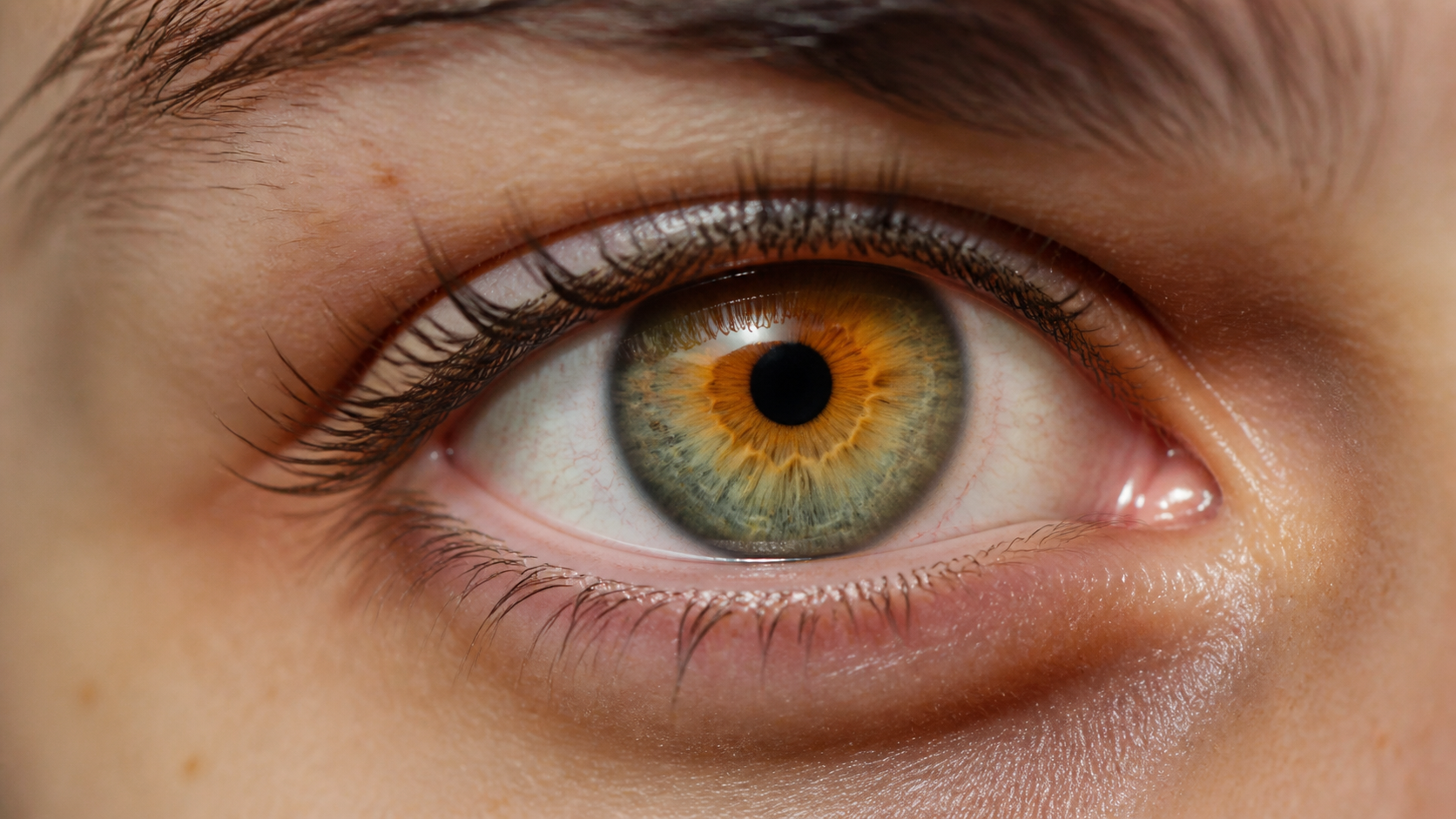
Rare eye color combinations usually refer to eyes that do not fit neatly into a single solid category, such as heterochromia, central heterochromia, sectoral color patterns, or unusually mixed irises. In practice, these patterns result from pigment distribution, light scattering, and genetics, not just one “main” color. If your eyes seem blue and green, brown and amber, or different from one eye to the other, a careful classification has to look at pattern as well as color.
What counts as a rare eye color combination?
A rare eye color combination is any iris appearance that goes beyond a single uniform shade across both eyes. That can mean each eye is a different color, one iris contains multiple distinct zones, or a section of the iris has a sharply different hue from the rest.
The six broad eye color families are blue, green, hazel, brown, gray, and amber. Most people still fit within one of those families overall, but some irises show combinations that are visually unusual enough to need a second layer of description.
The most common types of unusual combinations
- Complete heterochromia: one eye is a different color from the other
- Central heterochromia: a distinct inner ring around the pupil differs from the outer iris
- Sectoral heterochromia: one wedge or patch of the iris is a different color
- Mixed hazel patterns: green, gold, and brown blend without a sharp border
- Gray-blue or blue-green ambiguity: low-melanin eyes shift in appearance depending on lighting
This matters because “rare” can mean two different things. It may describe a globally uncommon base color, such as green eyes, which occur in about 2% of the world, or it may describe an uncommon pattern placed on top of a more common base color.
For context, global rarity estimates often cited are brown about 79%, blue about 8%, hazel about 5%, amber about 5%, green about 2%, and gray about 1%. A person with gray eyes and central heterochromia is rare both in base family and pattern. A person with brown eyes and sectoral heterochromia has a common base family with an uncommon presentation.
How is heterochromia different from central heterochromia and sectoral heterochromia?
People often use “heterochromia” as a catch-all, but the subtypes matter. They describe different visual structures in the iris.
Complete heterochromia
Complete heterochromia means each eye appears to be a different color overall. One eye might be brown and the other blue, or one hazel and the other green. This is the clearest form because the distinction occurs between the two eyes, not within one iris.
Central heterochromia
Central heterochromia means the inner part of the iris, close to the pupil, forms a distinct ring that differs from the outer color. A common example is a golden or amber center with a green or blue outer iris. Unlike hazel, central heterochromia often looks more ring-like and structured.
Sectoral heterochromia
Sectoral heterochromia means one section of the iris differs from the rest. It may look like a brown slice in an otherwise green eye, or a blue segment in a gray iris. The border can be sharp or feathered.
> Heterochromia is a pattern category, not a single eye color. A person with heterochromia still usually belongs to one or more of the six core eye color families.
If you want a fuller explanation of the condition types themselves, see further reading on heterochromia. The key angle here is classification, especially when a person wants to know what to call their eye color in ordinary terms.
Why do rare eye color combinations happen?
Rare eye color combinations happen because iris appearance is built from layered biology. Melanin amount matters, but so do melanin type, gene variants, collagen structure, and how light interacts with the iris.
Pigment amount and distribution
Brown eyes contain more melanin overall, especially eumelanin, the dark brown to black pigment. Lighter eyes tend to have less melanin, and variations in pheomelanin, a reddish-yellow pigment, can contribute to warm golden or amber tones.
When pigment is unevenly distributed across one iris or between the two eyes, unusual patterns can appear. This can produce a central ring, a sectoral patch, or two clearly different eye colors.
Key genes involved
Eye color is polygenic, so no single gene explains every rare combination. Still, several genes are especially important:
- OCA2 influences melanin production in the iris
- HERC2 regulates OCA2 expression and strongly affects blue versus brown tendencies
- TYR helps control melanin synthesis
- SLC24A4 is associated with lighter eye color variation
Research suggests OCA2 and HERC2 are among the strongest contributors to common eye color differences, especially along the blue-brown spectrum. But mixed or rare-looking patterns often reflect several genes interacting rather than one simple switch.
Light scattering in blue and gray eyes
Blue eyes are not blue because they contain blue pigment. They appear blue largely due to the Tyndall effect, where shorter wavelengths of light scatter in the iris stroma. Gray eyes also involve low melanin and structural light effects, but often with different stromal density and less saturated scattering.
That is one reason some eyes look blue in one setting and gray in another. It is also why combination eyes can be hard to label from memory instead of from a photo.
For more on the genetics side, see eye color genetics explained. For the broader science of pigment and light, what determines eye color covers the basics without repeating them here.
Which rare eye color combinations are actually the rarest?
The rarest eye color combinations tend to involve both a rare base family and an uncommon pattern. There is no perfect worldwide ranking because large population databases rarely categorize every heterochromia subtype consistently, but some combinations are clearly more unusual than others.
Likely very rare combinations
- Gray eyes with complete heterochromia
- Green eyes with sectoral amber or brown patches
- Amber eyes with central heterochromia
- One gray eye and one green eye
- Blue eyes with sharply defined sectoral brown segments
Gray eyes are already estimated around 1% globally. Green eyes are about 2%. Pair either of those with a distinct heterochromia pattern, and you are combining a rare family with an uncommon structure.
Amber can also be confusing because it is often mistaken for light brown or hazel. That means true amber-based combinations may be undercounted in everyday descriptions. If you suspect that warm copper or honey look, compare with the amber eyes guide and the brown eyes guide.
Commonly claimed, but not always truly rare
Some combinations sound rare but are actually just difficult to label:
- Blue-green eyes that shift with lighting
- Hazel eyes with a bright golden center
- Gray-blue eyes in cool daylight
- Light brown eyes with honey flecks
These are visually striking, but they may fall within known mixed-family presentations rather than a distinct rare condition. That is especially true with hazel, which naturally combines green, brown, and gold.
If your main question is whether your eye is blue or green rather than truly heterochromic, blue vs green can help narrow that down.
Is central heterochromia just hazel eyes?
No. Central heterochromia is not always the same as hazel, though the two are often confused.
What hazel usually looks like
Hazel eyes usually show a blended mix of green, brown, and gold across much of the iris. The colors can appear to shift with light, clothing, and surrounding contrast. Hazel often has a softer transition between tones.
What central heterochromia usually looks like
Central heterochromia usually has a more distinct inner ring around the pupil. The center may be amber, gold, or brown, while the outer iris appears blue, gray, or green. The border tends to look more organized than a general hazel blend.
Why people mix them up
Both patterns can include multiple colors in one iris. The difference is the geometry:
- Hazel tends to look mixed and diffuse
- Central heterochromia tends to look ringed and layered
A good test is to look for a clear sunburst or inner circle that is separate from the outer iris. If the center color forms a defined zone, central heterochromia is more likely. If the colors blend through much of the iris, hazel may be the better label.
For side-by-side help, see green vs hazel eyes and the hazel guide. Those resources focus on the hazel question specifically, while this article focuses on rare combinations and patterns.
Can lighting make a normal eye look like a rare combination?
Yes. Lighting can make an ordinary eye look far more unusual than it is. That does not mean the eye color is fake, only that iris appearance is strongly affected by context.
Why photos change perception
Several factors alter how eye color appears in photos:
- direct sun versus shade
- warm indoor bulbs versus cool daylight
- phone image processing
- contrast from skin tone, makeup, and clothing
- pupil size, which changes the visible iris area
Blue, gray, green, and hazel eyes are especially sensitive to these shifts because they have less uniform dark pigment than brown eyes. A cool light source can emphasize gray or blue tones. Warm light can make gold, amber, or hazel tones stand out more.
Why memory is unreliable
Most people do not see their own irises in sharp detail very often. They remember a social label like “green” or “brown,” not the exact ring structure, sector shape, or fleck distribution. That is why many people are unsure whether they have central heterochromia or just mixed hazel coloring.
If you want to understand appearance shifts more broadly, do eyes change color explains the difference between lighting effects and actual biological change.
How do you identify a rare eye color combination accurately?
The best way to identify a rare eye color combination is to classify both the base family and the pattern. A single-word label is often not enough.
Step 1: Find the dominant family
Start with the color that covers most of the iris. Ask whether the outer iris appears mostly blue, green, hazel, brown, gray, or amber. If you are split between two options, compare dedicated guides such as blue eyes and gray eyes.
Step 2: Look for pattern structure
Then ask whether one of these patterns is present:
- Different color in each eye
- Distinct ring around the pupil
- Wedge or patch of another color
- General blended multi-tone appearance
Step 3: Separate pattern from color family
This is the part people often skip. “Green with central amber ring” is more precise than just “hazel.” “Brown with sectoral light patch” is more precise than just “brown.” “One blue eye and one brown eye” is more precise than simply “heterochromia,” because it describes both pattern and family.
Step 4: Use clear photos
For the most accurate read:
- face a window or soft natural light
- avoid heavy shadows and flash glare
- keep the camera focused on the iris
- photograph both eyes separately if needed
- avoid color filters and beauty processing
The point is not perfection. It is consistency. A decent close-up in neutral light usually gives more reliable clues than guessing from a mirror.
How does the Eye Color Identifier handle heterochromia and mixed irises?
The Eye Color Identifier works best when it treats eye color as more than one flat label. Rare eye color combinations need a pattern-aware approach, especially for central rings, sectoral patches, and eyes that sit between common categories.
It starts with the six core families
Every classification still maps back to the six main families, blue, green, hazel, brown, gray, and amber. That keeps the result grounded in a system people can understand and compare.
It looks at visible distribution, not only one average color
For mixed irises, the important question is not just “what is the average hue?” It is also:
- where is the dominant color located?
- is there a distinct inner ring?
- is one section visibly different?
- does the outer iris fit one family while the center fits another?
This matters because averaging the iris can flatten a real pattern. A green outer iris with a clear amber center should not automatically be reduced to one muddy in-between label.
It helps when one eye differs from the other
With complete heterochromia, each eye may need to be evaluated on its own. One eye can read as blue while the other reads brown or hazel. The result is more useful when both eyes are described clearly rather than forced into a single category.
It is useful for edge cases people debate for years
Some people have spent years hearing different answers from different people. One friend says green. Another says hazel. A passport form says brown. A close-up photo shows a gray outer ring and gold center. In those edge cases, the eye color identifier can provide a more structured read based on what is actually visible.
Privacy also matters with eye photos. Photos and data are kept secure, and photos are not stored.
How the Eye Color Identifier helps
If you are trying to sort out rare eye color combinations, the most useful approach is to check the iris pattern in a clear image rather than rely on old labels. Identify your eye color with Eye Color Identifier to see whether your eyes fit a core family, show central heterochromia, or have a mixed pattern that deserves a more precise description.
It is especially helpful when your eyes seem to change between blue, green, gray, hazel, or amber depending on the setting. You can also compare the result with guides like green eyes, hazel eyes, and gray eyes to understand where your appearance sits.
Are rare eye color combinations inherited?
Often, yes, but not in a simple one-parent-one-color way. Rare eye color combinations can run in families, yet the exact presentation may differ from one person to the next.
Genetics sets the range, not always the exact pattern
A family may carry variants linked to lighter eyes, mixed pigmentation, or unusual iris patterning, but one person may show green eyes, another hazel, and another central heterochromia. Because eye color is polygenic, inheritance is not as tidy as old classroom charts suggest.
Heterochromia can be congenital or acquired
Some heterochromia is present from birth and remains stable. In other cases, a difference in color can be acquired later through injury, inflammation, medication effects, or other eye conditions. If a new color difference appears suddenly, that is a medical question, not just a classification question.
Rare does not mean unhealthy
Most unusual eye color combinations are harmless natural variations. A central ring or sectoral patch alone does not automatically mean anything is wrong. The concern is change, especially sudden change.
Seek medical evaluation if you notice:
- a new patch of color that was not there before
- one eye changing noticeably over time
- pain, redness, or vision changes along with color change
- a white, cloudy, or irregular pupil appearance
Frequently asked questions
What is the rarest eye color combination?
There is no single universal winner because rare eye color combinations are not tracked consistently worldwide. In general, combinations that involve a rare base family, like gray at about 1% or green at about 2%, plus heterochromia or a sectoral pattern, are among the rarest.
Is central heterochromia considered rare?
Central heterochromia is uncommon, but it is probably overcalled online because many hazel eyes are mistaken for it. The key sign is a distinct inner ring around the pupil that differs clearly from the outer iris.
Can you have hazel eyes and heterochromia at the same time?
Yes. A person can have a hazel-dominant iris and also show a structured heterochromic pattern, especially a central ring or a sectoral patch. The best label depends on whether the colors are blended or sharply separated.
Are amber eyes with green rings rare?
Yes, that would usually count as a rare eye color combination. Amber itself is estimated around 5% globally, and when it appears with a strong green outer ring or other unusual structure, the pattern becomes even less common.
Do rare eye color combinations change with age?
Some apparent changes are due to lighting, pupil size, and photo processing rather than true biological change. Real eye color can shift in infancy and, less commonly, later in life, but a sudden new difference between areas of the iris should be checked by an eye professional.
Can an eye color test detect heterochromia?
A good eye color test can help identify visible differences in iris family and pattern, especially from clear close-up photos. For complete heterochromia, each eye may need separate evaluation. For central or sectoral patterns, the tool should assess distribution, not just one average color.
Identify your eye color now
If your eyes do not fit one simple label, use Eye Color Identifier to check the dominant family and any unusual pattern more clearly. It can help you tell the difference between hazel, central heterochromia, sectoral variation, and genuinely rare eye color combinations.
Try the Eye Color Identifier
Find your eye color in seconds. Your data is kept secure — we don't store your data.
More articles
Do Eyes Change Color? Babies, Light, and Real Changes
Do eyes change color? Learn when shifts are normal in babies, why hazel and lighting can mislead, and when eye color changes merit a check.
Eye Color Identifier: What Eye Color Am I, Really?
Eye color identifier guide: learn how AI answers “What eye color am I?”, why eyes get mislabeled, and what genetics can and cannot tell you.
Two Different Colored Eyes Explained: Heterochromia Types
Two different colored eyes can result from heterochromia. Learn the types, causes, rarity, and when color changes need a doctor visit.