Jul 21, 2026 · 12 min read
Eye Color Identifier: What Eye Color Am I, Really?
Eye color identifier guide: learn how AI answers “What eye color am I?”, why eyes get mislabeled, and what genetics can and cannot tell you.
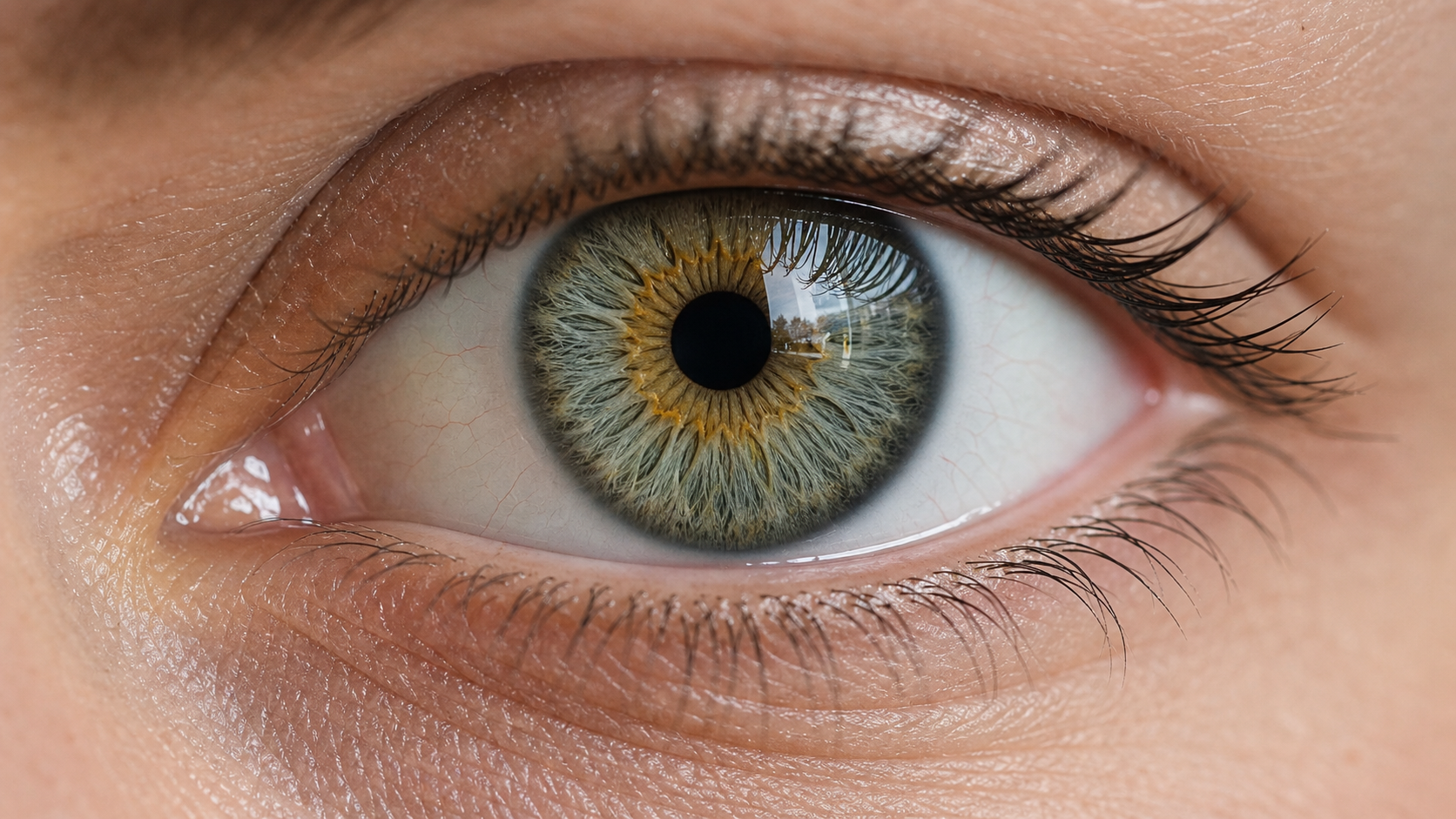
An eye color identifier helps answer the question, “What eye color am I?” by analyzing iris color patterns that people often misread in mirrors, selfies, and changing light. Many people grow up calling their eyes blue, green, or brown when they are actually gray, hazel, or amber, and genetics explains why those boundaries are not always simple. The short answer is that eye color is real, but perception is messy, and a consistent image-based analysis can make classification much clearer.
Why do so many people ask, “What eye color am I?”
Eye color sounds like it should be obvious. In practice, it often is not. The iris is not a flat paint swatch. It has layered pigment, fiber structure, rings, flecks, and light scattering effects that make the same eye look different from one room to another.
A person may have spent years saying they have green eyes because relatives called them green. Then one passport photo looks gray. A sunny outdoor photo looks blue. A close-up reveals yellow-brown pigment near the pupil, which points toward hazel. None of that means your eyes are changing color by the hour. It means human perception is inconsistent.
Common reasons eye color gets mislabeled
- Indoor lighting shifts color perception. Warm bulbs can make hazel and amber look browner.
- Outdoor light increases contrast. Blue and gray eyes often look brighter in daylight.
- Phone cameras process color automatically. White balance and HDR can change the apparent iris hue.
- People inherit family labels. If your parents called your eyes green at age five, that label may stick for decades.
- Mixed-color irises are harder to name. Hazel eyes especially are often mislabeled as green or light brown.
- Limbal rings and central heterochromia create confusion. Dark outer rings or warm inner rings can alter the overall impression.
This is one reason eye color questions show up so often in search. People are not just curious. They are trying to resolve conflicting signals from memory, photos, and family stories.
Why the label matters to people
For some, it is simple curiosity. For others, it affects identity. Eye color is tied to family resemblance, official descriptions, and even how people are described socially. It also comes up when comparing blue eyes, green eyes, or mixed categories like hazel and amber.
If you want a broader science background on pigment and light, see this further reading on what determines eye color.
How does an eye color identifier actually work?
An eye color identifier does not guess based on vibe. It evaluates visible features in the iris and places them into one of the six broad eye color families used by Eye Color Identifier: blue, green, hazel, brown, gray, and amber.
What the analysis looks for
The system looks at the iris, not the whole face, and checks color distribution rather than one single pixel value. That matters because many irises are multi-toned.
Key visual cues include:
- Base hue across most of the iris
- Secondary pigments or flecks
- Warm vs cool balance
- Outer ring contrast
- Inner ring coloration near the pupil
- Brightness and saturation under normalized lighting
For example, an iris that appears mostly cool-toned with low melanin and soft diffuse scattering may classify as blue or gray. An iris with green dominance plus clear golden-brown pigment toward the center may classify as hazel rather than green.
Why AI can help when humans disagree
Humans tend to overweight context. If someone has dark hair and medium skin tone, people may assume brown eyes. If someone appears fair, people may assume blue or green eyes. A visual classifier strips away some of those expectations and focuses on the iris itself.
That does not mean classification is perfect or that every eye fits into a hard border. It means the process is more consistent than memory, mirror impressions, or social shorthand.
> Eye color categories are human labels placed on a biological gradient. An eye color identifier is useful because it applies those labels consistently.
What it does not do
An eye color identifier does not read your DNA from a photo. It cannot determine every gene you carry. It also does not diagnose eye disease. It answers a visual classification question, which is often the practical question people mean when they ask, “What eye color am I?”
What genetics actually says about eye color
Many people learned a simple version in school, brown is dominant, blue is recessive, end of story. That model is incomplete. Eye color is polygenic, which means multiple genes contribute to the final appearance.
The major genes people should know
Research most often points to several important genes:
- OCA2, strongly involved in melanin production in the iris
- HERC2, which regulates OCA2 expression and is especially associated with blue vs brown variation in many populations
- TYR, involved in melanin synthesis pathways
- SLC24A4, linked to pigmentation differences
Other genes also matter, but these are the names most often referenced in accessible eye color genetics discussions.
Pigment and structure both matter
Brown and amber eyes generally involve more visible melanin, especially eumelanin. Lighter warm tones may also involve pheomelanin. Blue eyes are not blue because of blue pigment. They appear blue largely due to light scattering, often explained with the Tyndall effect, interacting with low melanin levels in the iris stroma.
Gray eyes are especially interesting because they may involve low melanin plus collagen density and scattering patterns that mute the blue effect. That is one reason gray eyes are often confused with blue.
Why genetics does not always give you a neat label
Genes influence pigment amount and distribution, but your visible eye color is still a phenotype, a final appearance shaped by several factors. Two siblings can inherit different combinations and end up with distinct labels. One may read as green, the other as hazel, even with overlapping genetics.
This is also why many border cases exist. If your iris sits near the line between green and hazel, or blue and gray, a family story about your genetics may not settle the visual answer.
For a deeper genetics-first explainer, see Eye color genetics explained.
Which eye colors are most often mislabeled?
Some categories are much more likely than others to cause confusion. Very dark brown eyes are rarely mistaken for blue. But once you get into lighter and mixed eyes, labels become unstable.
Hazel is the most commonly misunderstood
Hazel eyes are often described as green from a distance and brown from up close. That is because hazel usually combines green, gold, and brown in a way that shifts with light and angle. If someone has obvious warm pigment around the pupil and greener tones farther out, hazel is often the better label.
If that is your main question, compare this guide with green vs hazel eyes and this further reading on green vs hazel eye color.
Gray is often mislabeled as blue
Gray eyes are rare, around 1% globally, while blue eyes are much more common at around 8%. Because both are low-melanin categories with cool tones, many gray-eyed people grow up being told they have blue eyes. Gray tends to look more muted, smoky, or silvery, with less saturated blue.
This is one area where image-based classification is especially useful, because the difference can be subtle but consistent across properly lit close-ups.
Amber is often mislabeled as light brown
Amber eyes are often grouped under brown even though they tend to show a more golden, copper, or honey tone rather than a deeper chocolate tone. Global rarity is often estimated around 5%, similar to hazel. Because amber is less commonly discussed in everyday language, many people never consider it as an option.
For a focused comparison, see amber eyes and this amber vs brown guide.
Green gets overstated socially
Green eyes are rare, around 2% globally, but many people claim them. In everyday speech, “green” is sometimes used loosely for any light eye with a hint of warmth. True green usually reads predominantly green across most of the iris, without enough brown mixing to push it into hazel.
Brown includes a very wide range
Brown eyes are the most common worldwide, around 79%. But brown is not one uniform shade. Deep brown, medium brown, golden brown, and very dark brown all sit inside the same family. That can lead people with lighter brown eyes to wonder whether they are actually amber or hazel.
Can eye color look different in photos, mirrors, and sunlight?
Yes. This is one of the biggest reasons people get inconsistent answers.
Lighting changes the appearance, not usually the category
Your underlying iris color does not usually swing from brown to green in normal life. What changes is which features become most visible. Bright natural light can reveal green tones or gold flecks that disappear indoors. Dim light can flatten distinctions and make many eyes look darker.
Camera processing matters more than most people think
Modern phones automatically adjust:
- exposure
n- white balance - contrast - saturation - sharpening
Those adjustments can push a cool gray eye toward blue or a warm hazel eye toward brown. Front-facing cameras can be especially unreliable because they often smooth detail and alter color balance for portraits.
Mirrors are not neutral either
Bathroom lighting is notorious for warm casts. A yellow-toned bulb can make an amber eye look brown and a green eye look hazel. Even the wall color around the mirror can subtly affect how your eyes appear by reflection and contrast.
Best conditions for judging eye color
If you want the most reliable visual read, use:
- Bright but diffused natural light
- A sharp close-up of one eye
- No heavy color filters
- No colored contact lenses
- Minimal glare on the cornea
That is the same logic behind using a dedicated eye color test or AI eye color test instead of relying on a random selfie.
Why did my family say I had one eye color, but photos suggest another?
Because most eye color labels start socially, not scientifically. Parents describe a baby’s eyes early. Friends repeat the label. School forms and licenses may simplify further.
Childhood labels can stick long after the eyes settle
Some children’s eyes do darken in infancy as melanin production changes. A child called blue-eyed at six months may not remain clearly blue later. By the time eye color stabilizes, the original label may already be part of family identity.
Relatives often use broad categories
In normal conversation, people do not usually distinguish between gray and blue, or amber and light brown. They pick the nearest familiar term. That is practical, but not always accurate.
Identity and rarity can influence labels
Rare eye colors carry social attention. Green eyes in particular are often culturally romanticized. That does not mean people lie. It means memory can drift toward the more distinctive label when an eye sits near a border category.
It helps to remember that cultural associations are not the same as science. There is no strong evidence that a specific eye color determines personality, even if stereotypes exist.
Which six eye color families does the Eye Color Identifier use?
Eye Color Identifier sorts results into six broad families. This keeps the answer practical while still reflecting the most searched eye color categories.
Blue
Blue eyes usually show low melanin and a cool, light appearance shaped by light scattering rather than blue pigment. They are common enough to be recognizable, but they still get confused with gray in low-saturation cases. Read more about blue eyes.
Green
Green eyes are rare, around 2% worldwide. They often combine moderate melanin with structural light effects that create a true green appearance. They are frequently overcalled in casual conversation.
Hazel
Hazel eyes are mixed eyes, often showing green, gold, and brown. They are one of the most dynamic categories and one of the hardest to label by memory alone.
Brown
Brown is the most common eye color globally, around 79%. It reflects higher melanin levels and includes a broad range from medium brown to very dark brown.
Gray
Gray eyes are rare, around 1%. They usually appear cooler and more muted than blue, with a silvery or smoky cast.
Amber
Amber eyes often show a golden, copper, or honey appearance. They are uncommon and frequently lumped into brown unless the color is examined closely.
These six families are broad enough to be useful and specific enough to answer most “what eye color am I” questions. They also map well to public search behavior, which is why people often compare them directly using guides like blue vs gray eyes.
How the Eye Color Identifier helps
If you have spent years getting different answers from mirrors, family, and photos, the Eye Color Identifier gives you a more consistent way to classify what your iris actually looks like. It is built to analyze visible iris color patterns and sort them into the six eye color families, blue, green, hazel, brown, gray, and amber.
This is especially useful for people whose eyes sit near a boundary category, such as blue versus gray or green versus hazel. Instead of guessing from memory, you can identify your eye color from a close-up image under better conditions. Photos and data are kept secure, and photos are not stored.
If you are still at the stage of exploring your options, you can also start with what is my eye color or try an eye color analyzer for another entry point.
What if my eyes seem to match more than one category?
That is normal. Human eye color exists on a spectrum, while labels are discrete buckets.
Border cases are expected
An eye may sit between blue and gray, or between green and hazel. In those cases, the best label is usually the one that reflects the dominant overall iris appearance, not a single fleck or ring.
Central heterochromia is not the same as mixed overall color
Some eyes have a distinct ring of different color around the pupil. That can coexist with a main eye color family. A blue eye with a golden center is not automatically hazel if the overall iris still reads blue. If you want more on this pattern, see Two different colored eyes explained: heterochromia types.
Think dominant pattern, not isolated detail
A close-up may reveal tiny brown specks in a green iris or a steel-blue cast in an otherwise gray iris. Those details matter, but the category should come from the full distribution of color.
That is one reason a structured classifier is helpful. It evaluates the iris more holistically than a quick visual impression.
Does eye color ever actually change?
The answer is sometimes, but not usually in the dramatic way people imagine.
Normal changes across life stages
Eye color can shift in infancy as melanin levels settle. Small changes in appearance can also happen across life due to lighting, pupil size, aging, and overall iris texture becoming more or less noticeable.
Temporary appearance changes are common
Pupil dilation changes how much of the iris is visible. Clothing, makeup, and surrounding light can all alter perceived color contrast. This creates the feeling that eye color changes, even when the base classification stays the same.
Sudden major change needs medical attention
A sudden true eye color change, especially in one eye, is not something to treat as a cosmetic curiosity. It can relate to injury, medication effects, or eye conditions, and it should be assessed by an eye care professional.
For classification purposes, though, most people are not dealing with a true biological color change. They are dealing with variation in perception.
Frequently asked questions
Is an eye color identifier accurate for mixed eyes like hazel?
An eye color identifier is often most useful for mixed eyes because hazel is one of the most commonly mislabeled categories. The result depends on image quality and lighting, but a close-up under neutral light usually gives a better answer than memory or mirror impressions.
Can genetics tell me exactly what eye color I am?
Not exactly from a practical consumer standpoint. Genetics can explain why your eyes tend toward certain pigment patterns, and genes like OCA2, HERC2, TYR, and SLC24A4 matter, but a visual eye color identifier answers the appearance question more directly.
Are gray eyes just light blue eyes?
Not always. Gray eyes tend to appear less saturated and more neutral or silvery than blue eyes, even though both are low-melanin categories. Because gray is rare, around 1% globally, it is often mislabeled as blue.
Why do my eyes look green in the sun and brown indoors?
That usually points to a mixed iris, often hazel, or to lighting that reveals different parts of the pigment distribution. Bright natural light can make green or gold tones more visible, while indoor warm lighting can flatten them into brown.
What is the rarest eye color family in the Eye Color Identifier?
Among the six families used by Eye Color Identifier, gray is generally the rarest at about 1% globally. Green follows at around 2%, while hazel and amber are each around 5%, blue around 8%, and brown around 79%.
Can I use a selfie to identify my eye color?
You can, but results are better with a sharp close-up where the iris fills more of the frame. A standard selfie often places the eye too far away and adds automatic processing that can make eye color harder to classify correctly.
Identify your eye color now
If you are still asking, “What eye color am I?”, the fastest next step is to use Eye Color Identifier with a clear iris photo. It gives you a structured answer based on visible iris patterns, not family lore or inconsistent lighting.
Try the eye color identifier now and see whether your eyes are blue, green, hazel, brown, gray, or amber.
Try the Eye Color Identifier
Find your eye color in seconds. Your data is kept secure — we don't store your data.
More articles
Rare Eye Color Combinations: Heterochromia and More
Rare eye color combinations include heterochromia, central rings, and sectoral patterns. Learn how they form and how to classify them clearly.
Do Eyes Change Color? Babies, Light, and Real Changes
Do eyes change color? Learn when shifts are normal in babies, why hazel and lighting can mislead, and when eye color changes merit a check.
Two Different Colored Eyes Explained: Heterochromia Types
Two different colored eyes can result from heterochromia. Learn the types, causes, rarity, and when color changes need a doctor visit.