Jun 21, 2026 · 12 min read
Amber vs Brown Eyes: How to Tell the Gold Difference
Amber vs brown eyes explained clearly, from golden pigment cues to lighting tricks and AI verification, so you can identify your iris color better.
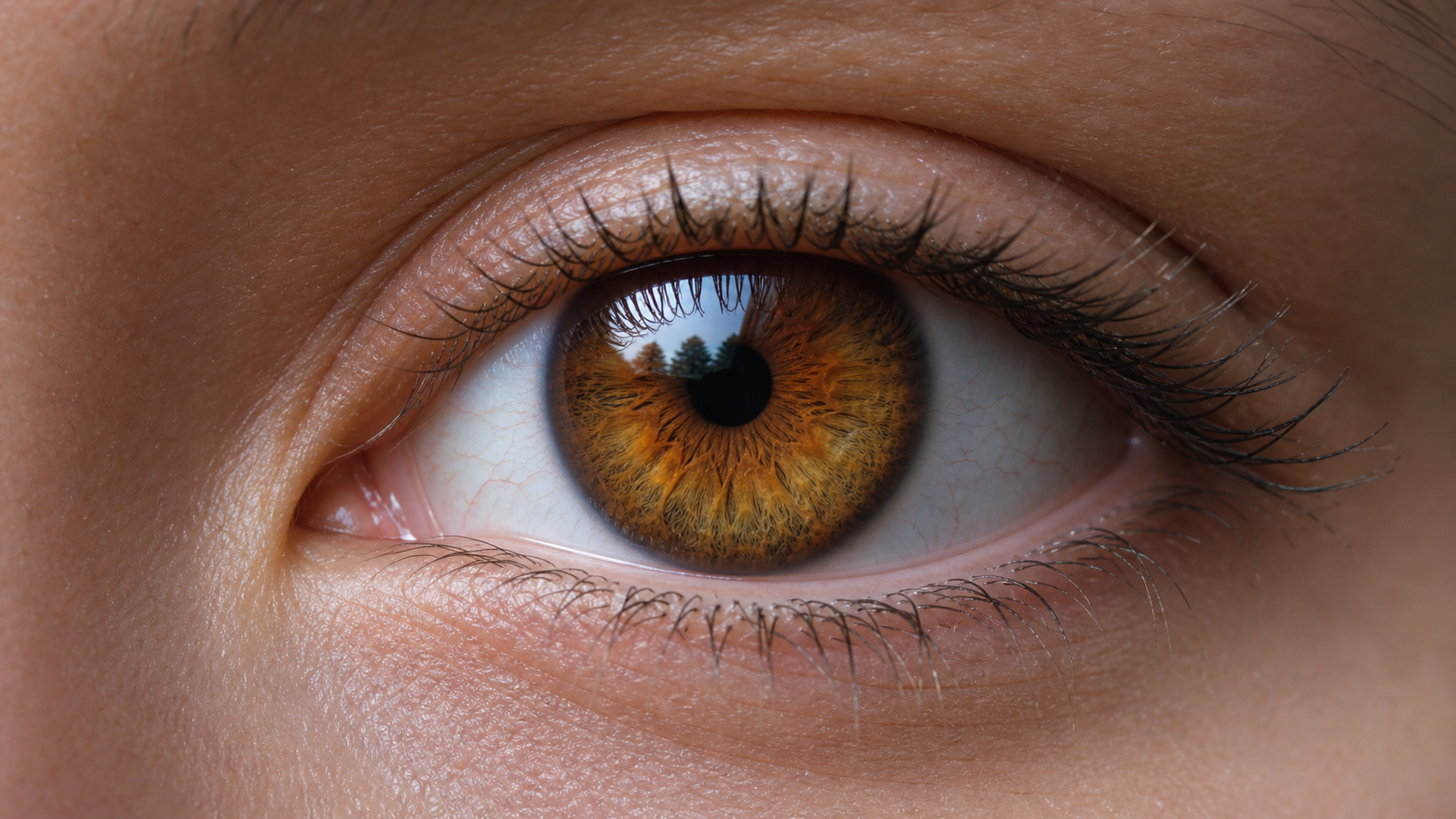
Amber vs brown eyes come down to one main difference: amber eyes have a clear golden, honey, or copper cast, while brown eyes are dominated by deeper eumelanin that reads chocolate, chestnut, or dark tan. Amber is also much rarer, around 5% globally, while brown eyes are by far the most common at about 79%. If your iris looks yellow-gold across most of the eye rather than simply light brown near the pupil, you may be seeing true amber rather than brown.
What is the difference between amber vs brown eyes?
The difference between amber vs brown eyes is not just brightness. It is color quality.
Brown eyes usually look tan, chestnut, coffee, or dark chocolate because they contain more melanin overall, especially eumelanin. Amber eyes tend to look lighter and warmer, with a distinctly golden or coppery tone. People often describe them as honey-colored, yellow-brown, or even wolf-like, though that last label is more cultural than scientific.
The fast visual test
If you are trying to tell them apart, ask these questions:
- Does the iris look golden or copper across most of the visible iris?
- Does it lack obvious green patches, which would point more toward hazel?
- Does it look warm and luminous even in neutral daylight?
- Does it still read gold rather than plain tan when the photo exposure is corrected?
If the answer to most of those is yes, amber becomes more likely.
The pigment difference
Iris color depends on pigment amount, pigment type, and how light scatters through the stroma of the iris. Two pigments matter most:
- Eumelanin, which is dark brown to black
- Pheomelanin, which is yellow to reddish
Brown eyes are strongly shaped by higher eumelanin levels. Amber eyes appear to involve a lower overall dark pigment impression with a stronger yellow-gold contribution, often described in relation to pheomelanin. Eye color is still polygenic, so there is no single "amber gene," but the visible result is meaningfully different.
Why people confuse them
Light brown eyes are common. Amber eyes are rare. That alone creates confusion, because the default assumption is usually "brown." If an eye is somewhere between tan and gold, many people label it brown unless the amber cast is especially obvious.
For a broader look at the color family itself, see the amber eye color guide. If your eyes seem mixed or shifting, compare with hazel eyes too.
Why are amber eyes considered rare?
Amber eyes are considered rare because they make up about 5% of the global population, while brown eyes account for roughly 79%. That means most people who wonder whether they have amber or brown eyes are statistically more likely to have brown.
> Brown eyes are the global majority, about 79%, while amber eyes are closer to 5%, which is why true amber is unusual and often mislabeled.
Rarity by eye color family
Using the six broad eye color families recognized by Eye Color Identifier:
- Brown, about 79%
- Blue, about 8%
- Hazel, about 5%
- Amber, about 5%
- Green, about 2%
- Gray, about 1%
That rarity matters because unusual colors are more likely to be overcalled in casual conversation. Social media filters and phone camera processing also push warm tones harder than the eye appears in person.
Why amber can look more dramatic than it is
Amber eyes often stand out in portraits because warm tones pop against skin and lashes. Auto white balance on phones can exaggerate gold and copper, especially indoors. So a rare color can look even rarer online, which makes reliable comparison more important.
If your eyes seem to sit between two categories, the eye color identifier can help you compare what the iris actually shows rather than what a filter suggests.
How can you spot the gold cast that makes amber distinct?
The gold cast is the key feature in amber vs brown eyes. You are not looking only for a lighter shade. You are looking for a yellow-gold, honey, or copper tone that appears across most of the iris.
Signs that point to amber
True amber eyes often show:
- A uniform golden, honey, or copper appearance
- Very little visible green, unlike hazel
- Less chocolate or espresso depth than brown eyes
- A warm tone that stays present in daylight
- An iris that can look almost yellow-brown rather than neutral brown
Signs that point to brown
Brown eyes often show:
- A more neutral tan, chestnut, or dark cocoa base
- Stronger dark pigment presence
- Less obvious gold across the full iris
- More depth near the limbal ring and outer iris
- Warmth that appears mostly under direct sun or indoor lighting, not consistently
Look at the full iris, not one bright fleck
Many brown eyes have amber flecks. That does not make the whole eye amber. What matters is the dominant visual impression across the iris.
A common mistake is to zoom in on one sunlit highlight and decide from that. Instead, step back and ask what color the eye reads as at conversational distance in neutral light.
For comparison with another warm-toned category, see brown eyes. If your iris has obvious green mixing with brown or gold, green vs hazel is often the better comparison.
Do lighting and photos make amber vs brown eyes harder to tell apart?
Yes. Lighting is one of the biggest reasons amber vs brown eyes get confused.
Warm indoor light can fake amber
Incandescent bulbs, sunset light, and warm LEDs add yellow and orange to the iris. A light brown eye can suddenly look honey-colored in those conditions. That is why selfies taken in the car or near a lamp often make eyes seem more amber than they really are.
Cool daylight is better for judging color
Neutral daylight gives the clearest read. Stand near a window, face the light, and avoid strong shadow. The goal is even illumination, not direct glare.
Phone processing changes iris color
Modern phone cameras apply:
- auto white balance
n- HDR contrast - saturation boosts - skin-tone adjustments - selective sharpening
Those edits can shift brown toward gold, or flatten subtle amber into ordinary brown depending on the device.
Best photo setup for checking eye color
Use this simple method:
- Face indirect daylight near a window.
- Turn off beauty filters, portrait effects, and color enhancement.
- Keep the camera level with the eye.
- Tap the iris to focus.
- Take several photos, then compare the unedited results.
If the eye reads golden across multiple neutral shots, amber becomes more plausible. If it swings from tan to dark brown depending on the room, brown is usually the safer label.
What causes amber and brown eyes genetically?
Amber and brown eyes are both shaped by melanin biology and genetics, but they are not created by a single simple switch. Research points to multiple genes influencing pigment amount, distribution, and iris structure.
The main genes involved
Several genes are commonly discussed in eye color research:
- OCA2, strongly associated with melanin production in the iris
- HERC2, which helps regulate OCA2 expression
- TYR, involved in melanin synthesis
- SLC24A4, associated with pigmentation variation
These genes do not work alone. Eye color is polygenic, which is why siblings can have noticeably different eye shades.
Why brown is common
Brown eyes generally reflect higher melanin expression, especially eumelanin in the iris. More pigment absorbs more light, which leads to the darker visual effect.
Why amber looks different
Amber appears to reflect a different visible balance, with less dark dominance and a stronger yellow-gold impression often linked to pheomelanin influence. Scientists still describe many eye colors in broad visual categories, so amber is easier to define by appearance than by one exact genetic pathway.
If you want the deeper inheritance background, see further reading on eye color genetics. That article covers the DNA side in more detail, while this guide stays focused on the visual distinction between amber and brown.
Are amber eyes just light brown eyes?
No. Amber eyes are not simply a lighter version of brown eyes, although the two can look close in some photos.
Lightness is not enough
A very light brown iris can still be brown if the overall impression is tan or chestnut rather than gold. Amber needs the warm golden cast to be the main story, not a side effect of bright lighting.
Uniformity matters
Amber eyes often appear more uniform in their honey or copper tone. Light brown eyes may show more variation, such as darker radial lines, deeper outer zones, or a stronger brown core.
Amber is a category, not a compliment
People sometimes call striking brown eyes "amber" because it sounds more unusual. That is understandable socially, but not scientifically helpful. If your eyes are beautiful light brown, they do not need a rarer label to be distinctive.
This is also why hazel should not be folded into amber. Hazel typically mixes brown with green and can shift noticeably by lighting and clothing. If that sounds familiar, this hazel identifier guide gives a different framework for mixed irises.
How do amber eyes compare with hazel, green, and golden-brown eyes?
Amber vs brown eyes is the main question here, but many people are really deciding among three or four nearby categories.
Amber vs hazel
Amber is usually more uniform and more golden. Hazel typically shows a mix of colors, often brown plus green, sometimes with a sunburst pattern around the pupil.
If your iris looks gold in one photo and green-brown in another, hazel is often the better fit than amber.
Amber vs green
Green eyes are much rarer, about 2% globally. They usually read mossy, olive, emerald, or gray-green rather than golden. Some green eyes have a warm ring near the pupil, but the dominant impression is still green.
You can compare with the green eye guide if the iris seems olive rather than gold.
Amber vs golden-brown
Golden-brown is not always a formal category. It is often a descriptive phrase for brown eyes with strong warm highlights. If the eye still reads brown first, it is usually brown. If it reads honey-gold first, amber becomes the stronger label.
Amber vs blue or gray shifts
This is less common, but some edited photos make amber eyes look oddly desaturated. If your comparison problem is actually between cool-toned shades, use blue vs gray instead. That avoids forcing a warm-eye question onto a cool-eye result.
Can eye color change over time, or is amber vs brown fixed?
Eye color is relatively stable after early childhood, but the way it appears can shift with age, health, environment, and lighting. That can make amber vs brown eyes feel less fixed than they are.
Childhood changes are normal
Babies and young children can experience visible eye color change as melanin develops. A lighter infant iris may darken over time, sometimes settling into brown, hazel, or another category.
Adult changes are usually about appearance, not category
In adults, the iris usually does not switch categories dramatically without a medical reason. What changes more often is perception:
- pupil size changes the visible iris pattern
- sun exposure affects surrounding contrast
- makeup and clothing shift how warm the iris looks
- dry eye or redness changes the overall color balance of the eye area
Sudden changes should be checked medically
A real, noticeable eye color change in one or both eyes can sometimes be linked to injury, medication, inflammation, or other eye conditions. That is not a cosmetic question. If your eye color seems to have changed abruptly, a clinician should assess it.
How the Eye Color Identifier helps
If you are stuck on amber vs brown eyes, a structured image analysis can be more reliable than guessing from memory or from one flattering selfie. Eye Color Identifier analyzes your iris photo and maps it to one of six eye color families: blue, green, hazel, brown, gray, or amber.
That matters because amber is easy to overcall when warm lighting is involved. The tool gives you a second opinion based on the visible iris, which can help you separate true golden amber from light brown with warm highlights. Photos and data are kept secure, and photos are not stored.
If you want another route into the same process, you can also explore the AI eye color test or the what is my eye color page for more context around classification.
What is the best way to verify whether your eyes are amber or brown?
The best way to verify amber vs brown eyes is to combine careful observation with neutral photos and a consistent classifier.
A practical verification checklist
Use this process:
- Check your eyes in indirect daylight, not warm indoor light.
- Look for a dominant gold, honey, or copper cast across most of the iris.
- Rule out green mixing, which may point to hazel instead.
- Compare several unedited photos, not just one favorite image.
- Run a clear iris photo through the eye color identifier.
What to ignore
Do not rely on:
- color-enhanced selfies
- mirror impressions under bathroom lights
- one tiny golden fleck in a mostly brown iris
- compliments that use "amber" loosely
- edited social media photos
When the answer is still "brown"
Most ambiguous cases still land on brown because brown is far more common and includes a wide range from dark espresso to light tan. That does not make the eye color ordinary in a negative sense. It just means the dominant pigment impression is brown rather than truly amber.
Frequently asked questions
Are amber eyes rarer than brown eyes?
Yes. Amber eyes are much rarer than brown eyes. Brown eyes are the global majority at about 79%, while amber eyes are closer to 5%, which is why amber vs brown eyes is such a common identification question.
Can brown eyes have amber flecks?
Yes. Brown eyes can have amber or gold flecks without being classified as amber eyes overall. In amber vs brown eyes, the deciding factor is the dominant color impression across the iris, not isolated warm specks.
Do amber eyes look yellow?
Sometimes, yes, but usually in a honey, golden, or copper way rather than a flat yellow. True amber eyes often have a warm gold cast that can look almost yellow-brown in strong neutral light.
Are amber eyes the same as hazel eyes?
No. Amber eyes are usually more uniform and gold-toned, while hazel eyes tend to mix brown with green and sometimes other tones. If the iris changes between green-brown and gold depending on conditions, hazel is often more accurate.
Can lighting make brown eyes look amber?
Yes. Warm indoor bulbs, sunset light, and phone color processing can make brown eyes look more golden than they are. That is why amber vs brown eyes should be checked in indirect daylight using unedited images when possible.
Is there a gene that specifically creates amber eyes?
Not a single one. Eye color is polygenic, and genes such as OCA2, HERC2, TYR, and SLC24A4 all play roles in pigmentation. Amber eyes are best identified by their visible golden appearance rather than by one simple genetic marker.
Identify your eye color now
Still unsure about amber vs brown eyes. Upload a clear photo to Eye Color Identifier and get a structured read on whether your iris fits amber, brown, or another eye color family. It is the quickest way to verify the gold cast instead of guessing from lighting alone.
Try the Eye Color Identifier
Find your eye color in seconds. Your data is kept secure — we don't store your data.
More articles
Rare Eye Color Combinations: Heterochromia and More
Rare eye color combinations include heterochromia, central rings, and sectoral patterns. Learn how they form and how to classify them clearly.
Do Eyes Change Color? Babies, Light, and Real Changes
Do eyes change color? Learn when shifts are normal in babies, why hazel and lighting can mislead, and when eye color changes merit a check.
Eye Color Identifier: What Eye Color Am I, Really?
Eye color identifier guide: learn how AI answers “What eye color am I?”, why eyes get mislabeled, and what genetics can and cannot tell you.